A word from our teacherごあいさつ
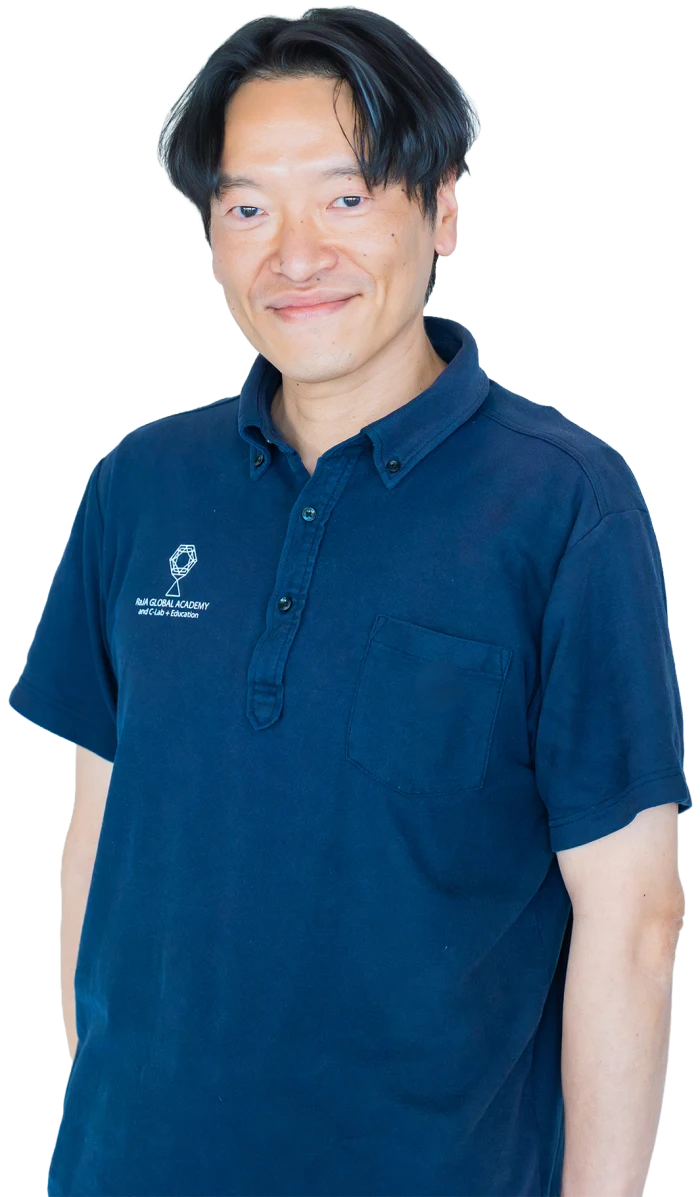
The environment surrounding children changes at a dizzying pace. Over many years of working with young children I have seen that the way we are with them in those early years becomes the foundation of their lives, and its source. In a world growing more connected and more international, being able to work out what you believe in, and to find the thing you can be absorbed by for a lifetime — I cannot say how fortunate that is.
The RaJA Method draws out a child’s interest and curiosity through first-hand experience, helps them acquire knowledge and courtesy, and grows the strength to get through life, with heart, brain and body in balance.
In the world they are walking into, I hope children will think for themselves about what they want and who they want beside them; that they will realise their dreams, love people, and live a life in which they are loved. The future reflected in a child’s eyes is our dream too.
Ensuring learning学びを確かなものに
A child’s free, flexible thinking is what makes learning stick.
We believe that the free, flexible thinking a child already has is the key to making learning stick. We also believe that growing the intellectual, the moral and the physical in balance is the foundation of a rich humanity and a healthy life, in body and in mind.
The methodRaJA式能力開発
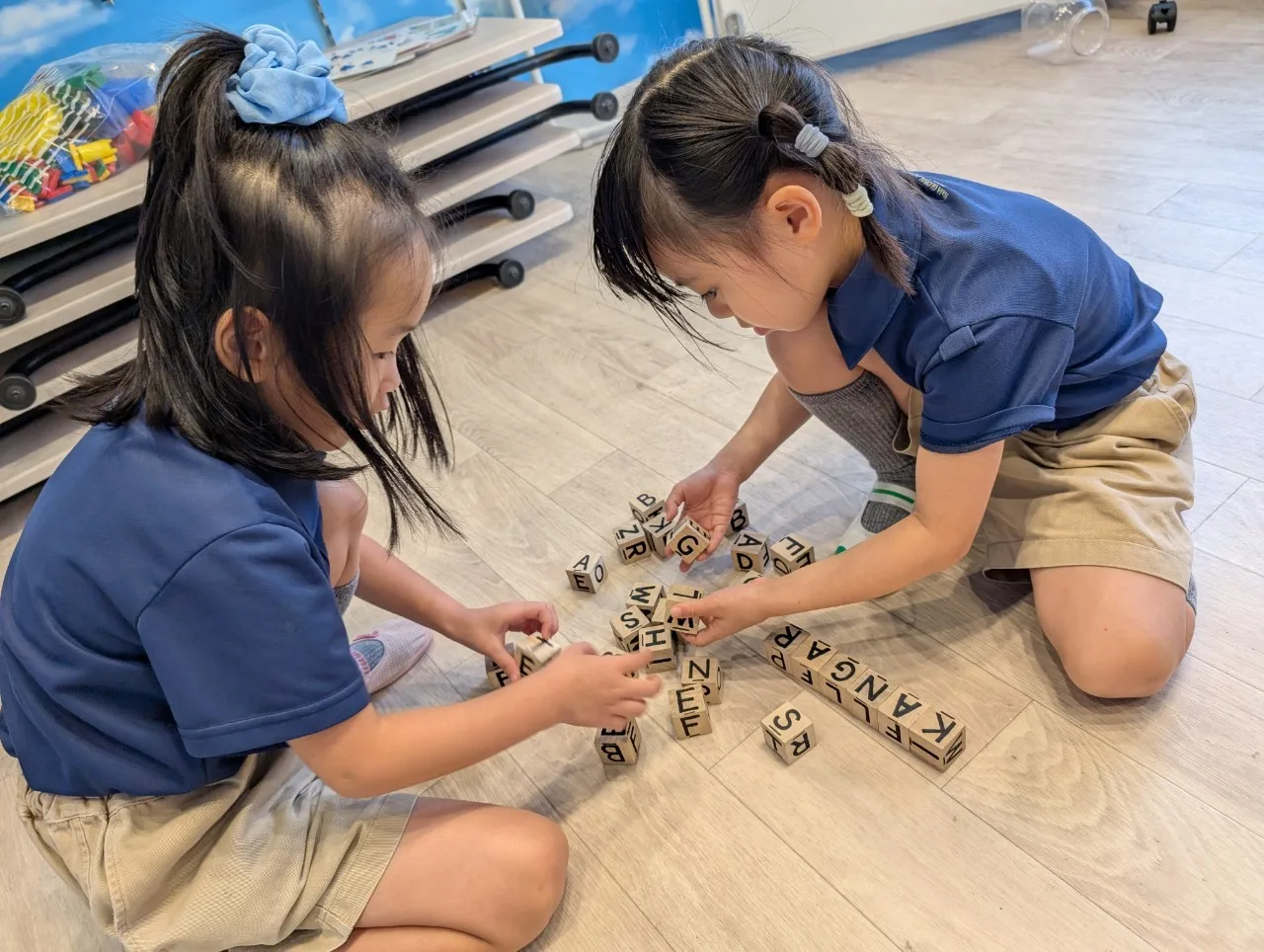
The method is RaJA’s own and is built on right-brain education — but it is by no means right-brain-only training. As people come to understand language, logical thinking develops with it, and they get pulled towards the left brain. So we borrow the right brain’s power over the formless — imagination and the like — and take an approach that brings the two sides into balance, turning it into learning of a higher quality.
Teaching Japanese languageRaJA式 右脳教育による「国語」教育
Text from the poster
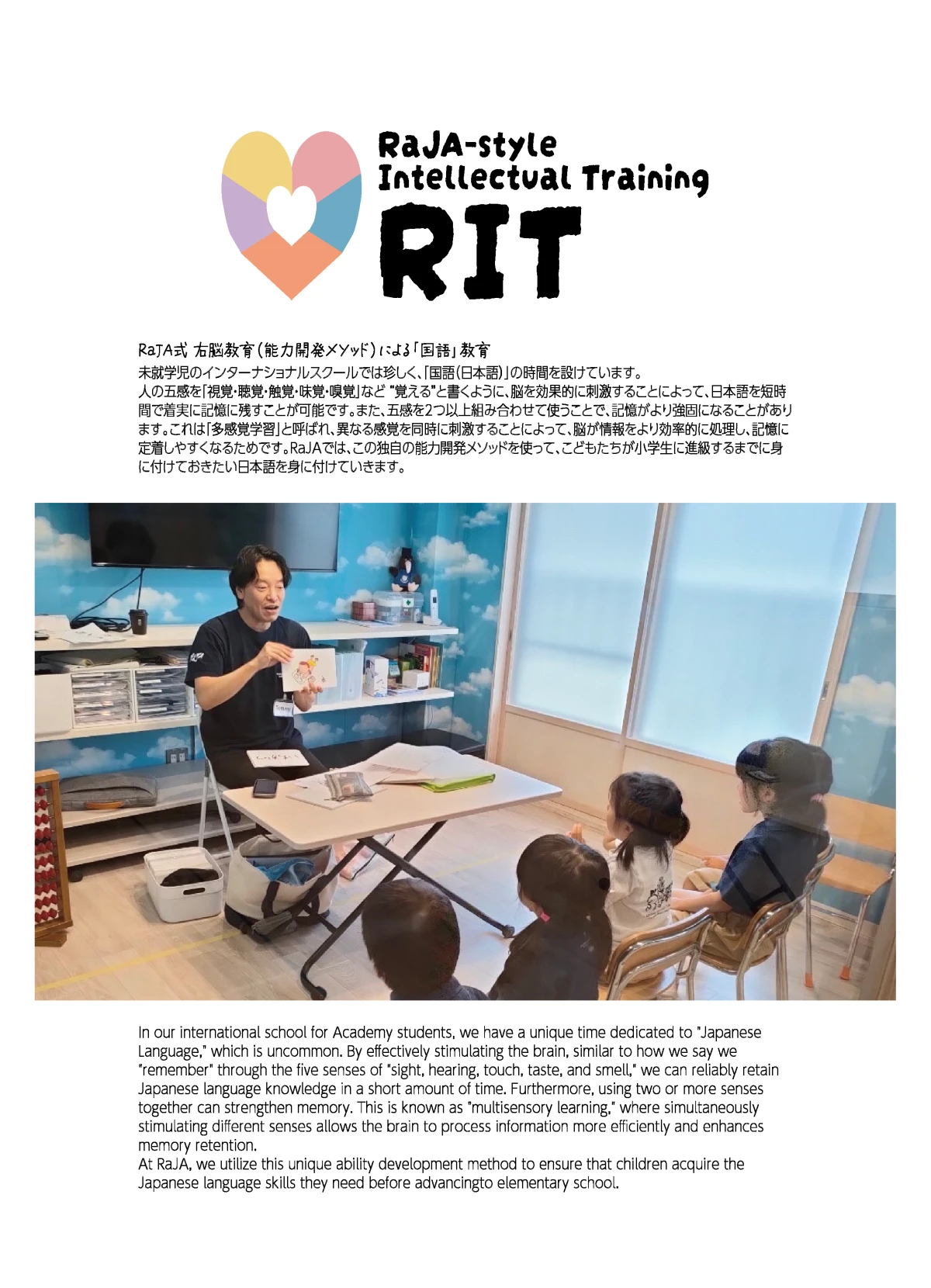
Teaching Japanese language through RaJA’s right-brain method
In our international school for Academy students, we have a unique time dedicated to “Japanese Language,” which is uncommon.
By effectively stimulating the brain, similar to how we say we “remember” through the five senses of “sight, hearing, touch, taste, and smell,” we can reliably retain Japanese language knowledge in a short amount of time. Furthermore, using two or more senses together can strengthen memory. This is known as “multisensory learning,” where simultaneously stimulating different senses allows the brain to process information more efficiently and enhances memory retention. At RaJA, we utilize this unique ability development method to ensure that children acquire the Japanese language skills they need before advancing to elementary school.
Five areas5つの柱
Heart
The power to think for yourself, and then act
However well a child does at their books, without love, a moral sense, ethics, patience and the willingness to work with others, what is really appealing about them never comes out. So that children can hold on to the courage to take a step, we train them to put into words what they themselves would do in a given situation.
Thinking under your own power, and carrying it through, is one single thing. We grow the forward-leaning feeling that pushes a child on, and make a habit of it.
Body
Strengthening the groundwork
The key to how the nervous system develops lies in early childhood. Through activities that use the whole body and the fingertips — often called the second brain — we encourage the body and the nerves to develop.
There is also work on deep breathing, which brings the parasympathetic system forward, relaxes the brain, and teaches a child the feel of putting themselves into a state where their own abilities come out.
Word
Say it and do it — words and actions are one thing
People think in words; words turn into knowledge, and knowledge becomes the way a person thinks. So words matter. Vocabulary, expression, comprehension, writing — children take a great deal in from songs, from greetings, from their friends and their teachers, and then remember it by saying it out loud.
Logic
Chew it and swallow it — learning by sight and by doing
A lesson in memory: repeated input, put back out again, until it settles. The RaJA way is not simply remembering what you saw. Children handle the actual objects, recognising them by sight and by feel, and then put back out what repetition — and the stronger impression that comes with real experience — has fixed. Linking their own experience to their own thinking turns something momentarily memorised into long-term memory.
Creativity
The bird’s eye that takes in what cannot be seen
Colour and shape, big and small, long and short, left and right, near and far, solid figures, sequence, substitution, coordinates — we approach the brain from many angles at once. Children arrange things, handle them and draw them, so that the movement itself is what makes it stick.